 Richard Pikmets
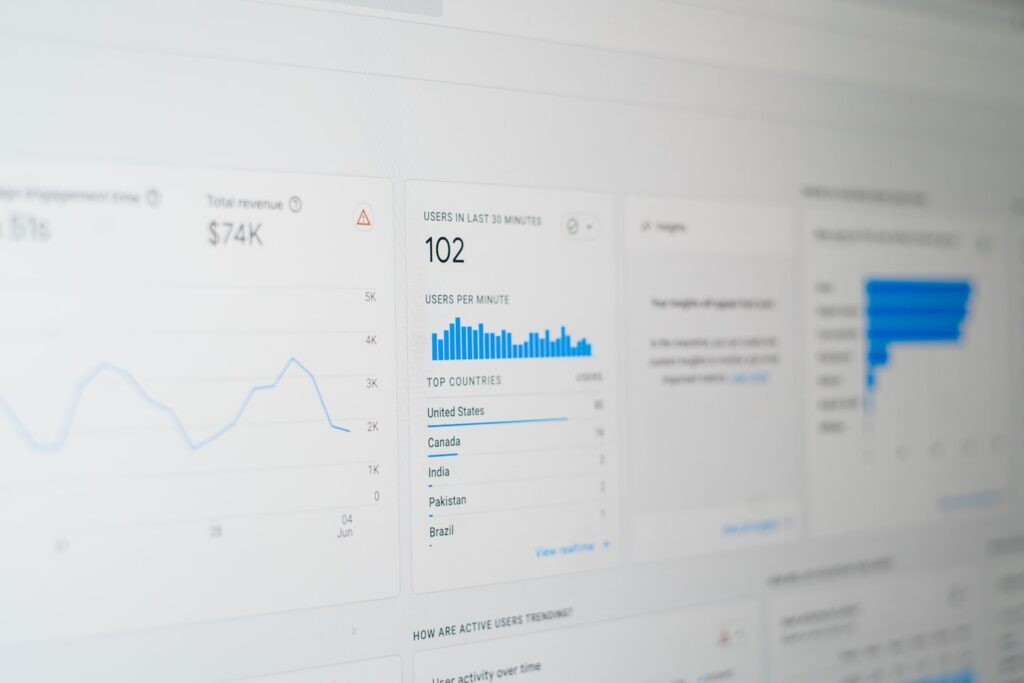
CTR, CPC and the number of conversions help you diagnose a campaign, but the question of return starts later: how much does a truly valuable customer cost, and how much value do they bring back to the business?
In short
CPA
How much does one measured conversion or customer cost?
ROAS
How much revenue comes back for every euro spent on ads?
Real profitability
Does the revenue cover margin, servicing and other costs?
An ad campaign can show a strong CTR and a cheap CPC and still be bad for the business. Equally, a more expensive click can make perfect sense if there’s a higher-value customer behind it. That’s why I look at results on several levels.
1. Start with the definition of a conversion
Before calculating CPA or ROAS, you need to be clear about what you call a conversion in the first place. A form button click, a successful enquiry, a qualified sales opportunity and a signed contract are not events of equal value.
If Google Ads or Meta optimises for button clicks but sales actually need qualified enquiries, the algorithm may very efficiently optimise for the wrong goal. If needed, start by fixing your conversion tracking.
2. CPA: a cheap conversion isn’t necessarily a cheap customer
CPA, or cost per acquisition/action, shows how much one chosen result costs. In a lead gen business, it’s important to decide whether CPA means a form enquiry, a qualified lead or an actual customer.
Example
Ad spend is €3,000. The campaign brings 60 enquiries, so the initial CPA is €50. If only 15 of them are qualified, the cost per qualified lead is already €200. If 5 of them become customers, the ad spend per customer is €600.
None of these numbers is good or bad in itself. The answer depends on the customer’s value and the margin.
3. ROAS: is ad revenue the same as profit?
ROAS is usually calculated as the ratio of revenue attributed to ads to ad spend. If you spend €1,000 and the platform attributes €5,000 in sales, ROAS is 5, or 500%.
But a 5× ROAS doesn’t automatically mean a big profit. If the product’s gross margin is small, returns are high or fulfilling the order is expensive, the break-even point may be much higher.
Ad platform ROAS is a useful management metric, but it doesn’t replace the company’s profit and loss statement.
4. For a lead gen business, look at the whole sales process
In B2B and services, revenue usually isn’t generated at the moment the form is submitted. So the tracking chain should at least be: ad → enquiry → qualified lead → proposal → sale. The more of these stages you can reliably link to a marketing source, the better your budget decisions become.
5. In an online store, look at revenue together with margin
In e-commerce, the purchase event and order value are a good start. The next step is to factor in product margin, discounts, shipping and return costs and, where relevant, repeat purchases. A high ROAS on a low-margin product may be weaker than a more modest ROAS on a very profitable product.
6. Don’t confuse attribution with tracking
Google Ads, Meta and GA4 may attribute the same sale differently. That doesn’t automatically mean one of the systems is broken. The platforms have different attribution models and data sources. What matters is understanding how the numbers come about and using consistent comparison logic in your decisions. Server-side GTM doesn’t fix faulty tracking. If you’re still considering it, read first when it pays off and when it doesn’t.
7. Which metrics belong in a management view?
- ad spend;
- quality conversions;
- CPA or customer acquisition cost;
- conversion rate;
- revenue and ROAS, if it can be measured reliably;
- lead quality, or what share of leads turn into sales;
- the trend compared with the previous period and the target.
CTR, CPC and the number of impressions help you look for causes. They help explain why a result changed, but they should rarely be used to judge the business’s success.
A practical check before increasing the budget
If you added 30% to the campaign budget tomorrow, could you say which business result you expect to grow and how you’ll measure it? If the answer is just “more clicks”, your tracking isn’t ready yet.